
 4 months ago
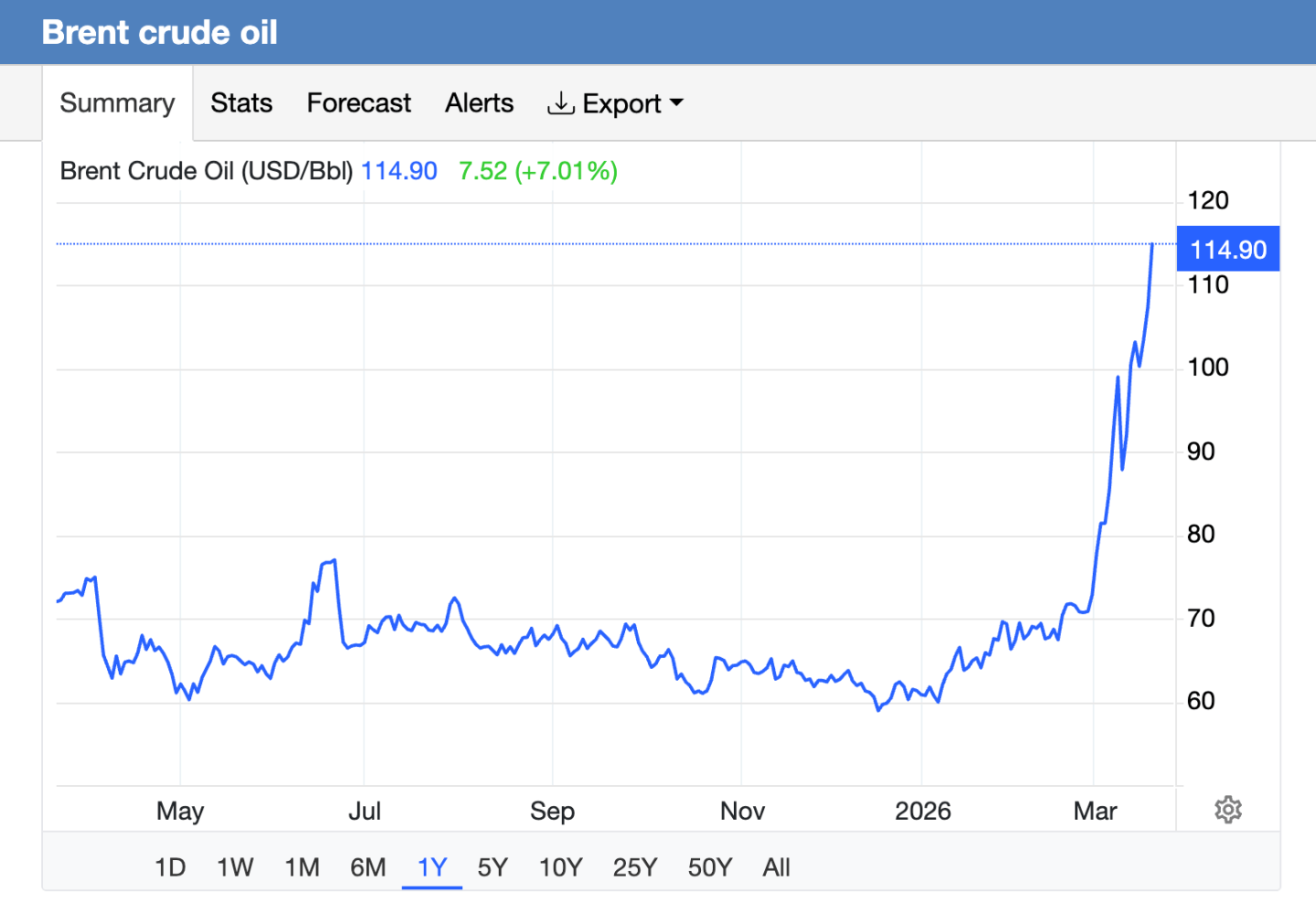
The price of a barrel of oil rose to $115. S&P 500 futures were flat after the index closed down 1.36% yesterday. The S&P is now down 3.23% year-to-date. All the major markets in Asia and Europe cratered this morning. The best performing was China’s CSI 300, down 1.61%. The worst was Japan’s Nikkei 225, down 3.38%. European traders watched their screens through the cracks between their fingers as most indexes approached losses of 2% before lunch.
- It’s almost inexplicable why oil prices aren’t higher. Here’s why markets are ‘resilient’ so far despite the biggest energy supply shock ever, by Jordan Blum.
- White House suspends the Jones Act for 60 days. Analysts see a 3-cent impact on gas prices, according to the AP.
- Time to sell tech? ‘Say thank you and get out’: Why one top strategist says to dump Magnificent 7 stocks now by Shawn Tully.
IRAN
Trump admits he ‘knew nothing’ about Israel attack on major Iran gas field
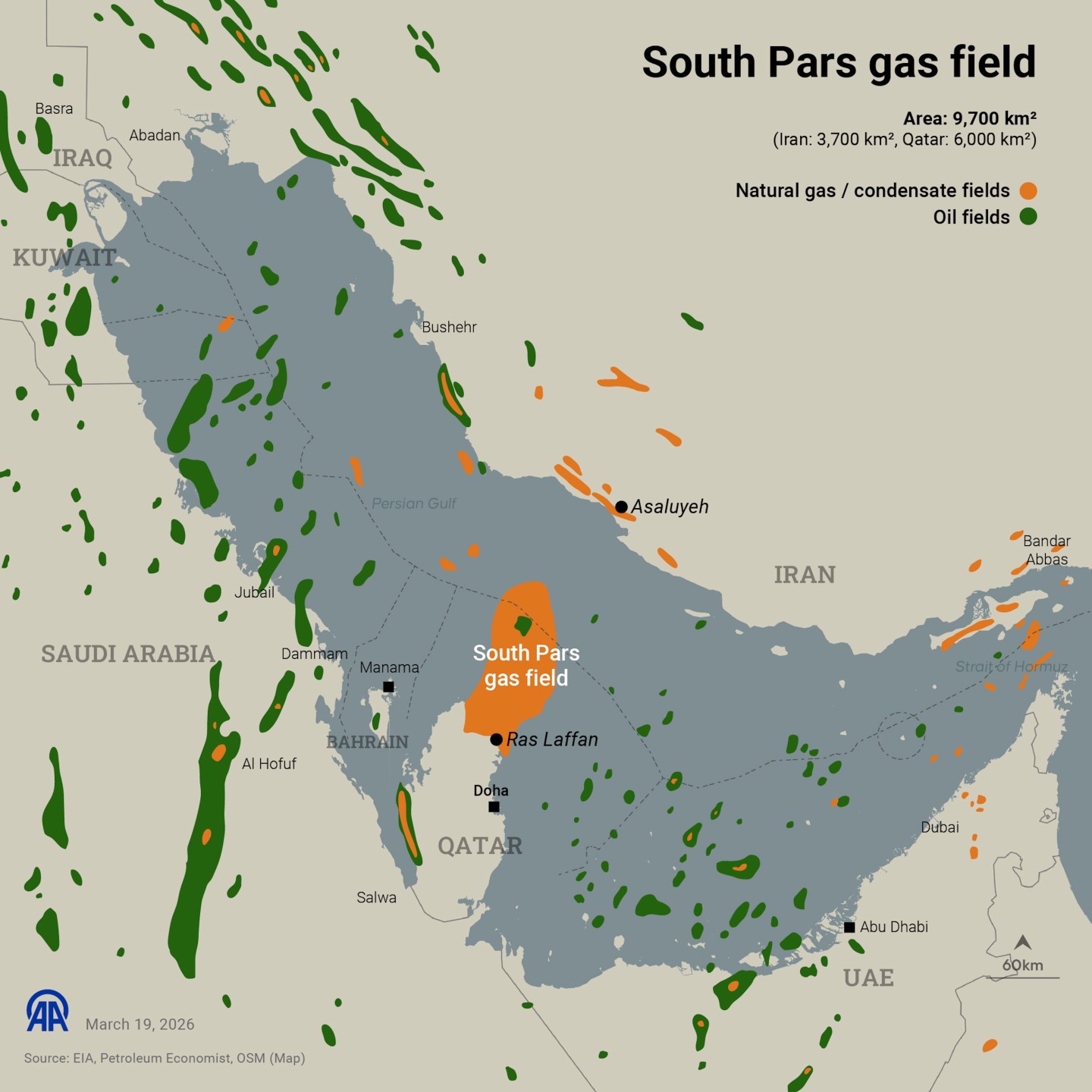
It’s chaos out there: The prices of oil and gas shot up again following an attack by Iran on the world’s largest gas field, located in Qatar. A previous Israeli strike against Iran’s South Pars gasfield was disavowed by President Trump in a social media post timestamped 2.05 am London time. Oil hit $115, and gas on the European markets rose by 30%. Among the strikes:
- Israel hit Iran’s South Pars field, and Trump is furious about it: “The United States knew nothing about this particular attack,” he said on social media. “NO MORE ATTACKS WILL BE MADE BY ISRAEL pertaining to this extremely important and valuable South Pars Field.”
- Iran hit Ras Laffan in Qatar, the site of Shell’s $18bn Pearl GTL plant. Ras Laffan supplies one-fifth of the world’s liquid natural gas.
- Iran also hit Saudi Arabia’s Yanbu refinery.
- Kuwait’s Mina Al-Ahmadi oil refinery was targeted by drones.
- The UAE’s Habshan gas facility was shuttered after debris fell on it from missile interceptions.
- In the U.S., a gallon of gas is now frequently above $4.
Trump appears to be trying to dial down the intensity of the attacks. He said, “Qatar was in no way, shape, or form involved with it, nor did it have any idea that it was going to happen. Unfortunately, Iran did not know this.” He said there would be no more attacks on South Pars unless Iran attacked Qatar first: “I do not want to authorize this level of violence and destruction because of the long-term implications that it will have on the future of Iran, but if Qatar’s LNG is again attacked, I will not hesitate to do so.” Clearly, there is a major split between the U.S. and Israel on war strategy.
In a move that suggests the war will not end any time soon, 2,200 U.S. Marines aboard the amphibious assault ship U.S.S. Tripoli are heading from Japan and are scheduled to arrive in the Middle East in a little more than a week, the Wall Street Journal reports. We don’t know what they will do when they arrive, but by definition, you don’t send Marines in an amphibious boat if you don’t expect them to land somewhere.
- One candidate: Trump may want control of Kharg Island, Iran’s major oil exporting terminal. As Fortune told you a couple of days ago, that scenario would add several more weeks of conflict to the situation.
Inside Iran’s war strategy: Survive and resist
Iran denied it had opened backchannel talks with the White House, claiming it was lie designed to lower the price of oil. The Financial Times, meanwhile, published two must-read stories this morning on how Iran sees the war, and why it might be harder to defeat than the U.S. thinks. First, the Islamic Revolutionary Guard Corps consists of 180,000 men, all of whom are prepared to die for their regime. They don’t care what happens to the economy or their infrastructure or the price of oil. Their only aim is to survive and resist, the FT says.
Iran might be persuaded to stop attacking U.S. targets if the U.S. withdrew from the area, the FT also reports, but that would allow Tehran to claim victory and it would solidify the regime’s control of the Strait of Hormuz—conditions the White House is unlikely to accept. Remember: Iran is currently picking and choosing which ships get safe passage through the strait.
Trump can’t negotiate with Iran if there is no one to talk to: “Trump is always willing to negotiate, so by this idea we mean a willingness to suspend the bombing campaign without concrete promises from the Iranian regime,” Andy Laperriere and his team at Piper Sandler told clients in a note seen by Fortune. “This also seems unlikely to happen over the next couple of weeks for a variety of reasons. It’s not clear who is in charge in Iran and if anyone could really speak for the regime. Even more importantly, Trump almost surely believes he will be in a stronger position to settle on better terms in a week, or two weeks, or later.”
China is eating popcorn right now
Trump was supposed to be meeting Xi Jinping to talk about trade but the summit has been cancelled because Trump wants to focus on Iran. China sees this as U.S. weakness:
- “President Trump’s request to delay his long-awaited summit with President Xi Jinping underscores how significantly he underestimated the fallout from Operation Epic Fury,” Ali Wyne, a China expert at the International Crisis Group, told the Associated Press. “A show of U.S. force that was meant to intimidate Beijing has instead served to puncture the illusion of U.S. omnipotence: Unable to reopen the Strait of Hormuz alone, Washington now needs its principal strategic competitor to help it manage a crisis of its own making.”
ARTIFICIAL INTELLIGENCE
Forget San Francisco. One of the biggest winners of the AI boom is in Boise, Idaho, the land of potatoes—and of memory chipmaker Micron. Micron's sales tripled year-over-year to $23.9 billion in its fiscal second quarter, thanks to red-hot demand for its chips. That's what happens when a construction boom of AI data centers causes a global shortage of memory chips and a spike in prices, Fortune’s Alexei Oreskovic tells me. Micron is one of the top three global producers (along with Samsung and Hynix) of the high-bandwidth memory that's paired with Nvidia's GPUs to train and run AI models. Companies can't get enough of the stuff.
The capex question: As it scrambles to capitalize on this demand, Micron is building more chip fabrication facilities. The company's capital expenditures this year will top $25 billion—higher than expected—and executives said that capex in the next fiscal year will increase by another $10 billion. Investors didn't seem to like that, and Micron's stock fell 4% after hours. Then again, the stock is up 62% this year. Can you blame investors for taking a little profit?
Will there be enough electricity? “The grid was never built to absorb” the demand for power coming from AI data centers, Wedbush analyst Dan Ives and his team told clients yesterday. They added, “Power demand is underestimated by ~10% as official forecasts miss the full scope of hyperscaler commitments, and efficiency gains are being treated as a demand moderator when history shows cheaper inference drives exponentially more usage.”
- Jensen Huang just painted the boldest image of AI’s future: 7.5 million agents, 75,000 humans—100 AI workers for every person, by Jake Angelo.
- Cognizant: Fortune 500 firm updates AI price tag to $4.5 trillion, estimating 93% of jobs vulnerable to disruption, by Jake Angelo.
- ‘A bend in the trajectory’: U.S. data center development has hit snags because the power grid is approaching its limits to support them, by Jacqueline Munis.
CHART OF THE DAY
There are a record number of objects orbiting earth
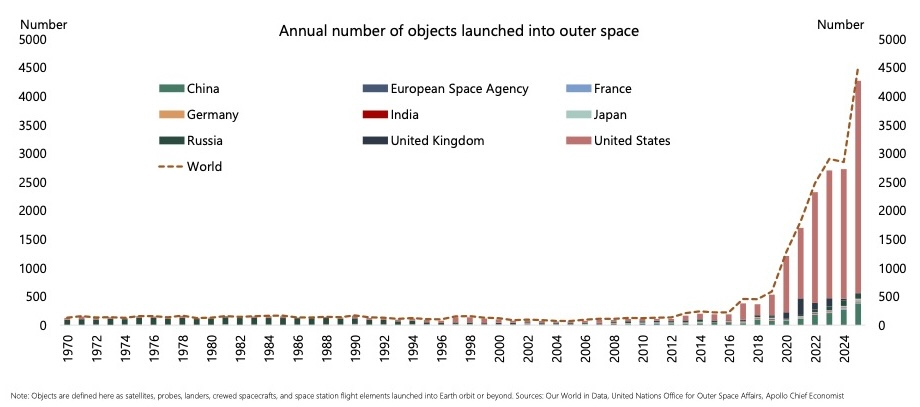
“More than 4,500 objects were launched into space in 2025, up from 600 in 2019,” according to Torsten Slok, chief economist at Apollo Global Management.
NUMBER OF THE DAY
37%
The percentage of women who use AI frequently, according to Amy Ho and her colleagues at J.P. Morgan. By contrast, 50% of men use AI frequently. “Women potentially face higher workplace displacement as they are disproportionately represented in AI-exposed roles (e.g., clerical and administrative roles),” Ho said in an analysis seen by Fortune. More women graduate from college than men, but within STEM careers, women represent only 28% of the workforce.
MORE FROM FORTUNE
Lamborghini is selling a record number of cars—but tariffs are eating its profits, by Sasha Rogelberg
Pokémon Go players built a 30-billion-photo map that’s now training robots to deliver your pizza, by Catherina Gioino
‘Plumbers regularly earn more than lawyers’: Top entrepreneur makes a bold prediction that AI will flip the American Dream, by Sydney Lake
The Trump Administration’s proposed capital gains tax cut could add nearly $1 trillion to the national debt within the decade, think tank warns, by Sasha Rogelberg
THE FRONT PAGES TODAY
Apple Is Way Behind in AI—and Still Making a Fortune From It - WSJ
Has Trump finally united Europe? - FT
Gold and silver sell off as inflation fears grip global markets - CNBC
Scoreboard on every street: Gas heads for $4 per gallon due to Iran war - Axios
HSBC Mulls Deep Job Cuts From Multiyear AI-Fueled Overhaul - Bloomberg
Google co-founder spends $45m in fight against California billionaire tax - The Guardian
ONE MORE THING
Perk watch: Some companies pay private school fees for CEOs’ kids
Most companies don't reimburse employees for their kids’ school tuition bills, but some still do, Fortune’s Amanda Gerut has noticed. Mettler-Toledo, which manufactures lab instruments and weighing technology, provides school expenses as part of its expatriate and international benefits package for some senior execs. Last year, the company paid $32,044 in school expenses for one executive. The company is incorporated in Ohio and based in Switzerland. TE Connectivity, headquartered in Pennsylvania but incorporated in Ireland, paid $123,332 in school costs for an executive on assignment in Switzerland. It also reimburses kids’ schooling fees for employees on international postings.