 16 hours ago
The S&P 500 has declined only 3% so far this year and is 5% below its all-time high, remaining well above bear market or correction levels. This suggests investors have yet to panic over the escalating conflict involving the U.S., Israel, and Iran. However, this sentiment may soon shift.
Oil prices have surged more than 40% since the war began two weeks ago and are up nearly 70% year-to-date. Despite this, prices remain below the peak levels seen after Russia’s 2022 invasion of Ukraine, even as Iran’s effective blockade of the Strait of Hormuz restricts about one-fifth of the world’s oil supply.
“The end is not in sight,” said Dan Alamariu, chief geopolitical strategist at Alpine Macro, in a note on Thursday. “The Strait of Hormuz is effectively closed, and markets are starting to price in a prolonged, uncertain endgame.”
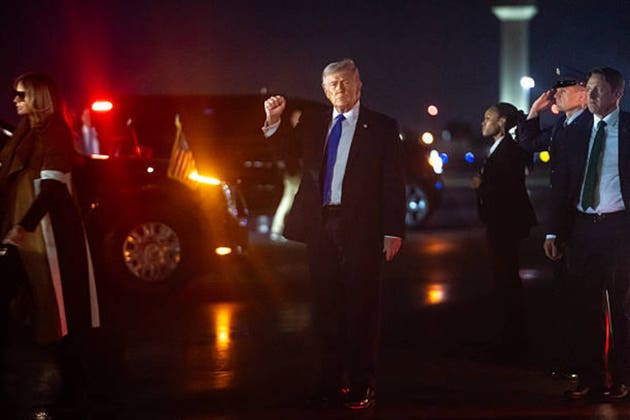
On Saturday, Reuters reported that U.S. and Iranian officials have rejected attempts by other Middle Eastern countries to initiate ceasefire talks. Subsequently, President Donald Trump told NBC News he is not yet willing to make a deal.
“Iran wants to make a deal, and I don’t want to make it because the terms aren’t good enough yet,” Trump said, adding that any agreement would have to be “very solid.” He declined to specify what those terms would be.
Despite heavy bombardment that has devastated Iran’s military and eliminated top leadership, the regime continues to threaten shipping in the Persian Gulf and keep oil prices elevated. Tehran shows no current interest in ending the conflict, aiming instead to deter future attacks by inflicting maximum economic damage now, Alamariu noted.
However, Alamariu expects the war to conclude within two months, as Iran faces economic pressures and internal political instability due to airstrikes targeting key repression forces like the Islamic Revolutionary Guard Corps and Basij militia. Rumors of power struggles have emerged, especially following Mojtaba Khamenei’s appointment as the new supreme leader.
“Even the Tehran regime has an incentive to eventually end the war, as a lengthy conflict risks fractures and threatens its own survival,” he wrote.
Trump faces his own challenges, including high oil prices and limited political support for the war amid upcoming midterm elections.
Meanwhile, both sides appear ready to escalate. On Friday, the U.S. attacked military sites on Kharg Island, Iran’s main oil export terminal, and is deploying 2,500 Marines to the Middle East. Iran has increasingly targeted civilian infrastructure in neighboring Gulf states and threatened the region’s largest port on Saturday.
Alamariu warned that Iran’s Houthi allies in Yemen may attempt to close the Red Sea to commercial shipping, adding further economic strain atop the Strait of Hormuz blockade.
“A simultaneous disruption of both straits would amplify the shock, affecting approximately 5 million barrels per day of oil flow through Bab el-Mandeb and disrupting a key Europe-Asia trade route,” he said. “This could further fuel inflation, especially in Europe.”
The U.S. is unlikely to launch a full-scale ground invasion of Iran, but seizing Kharg Island could cut off the regime’s revenue lifeline and potentially force a deal without occupying the mainland.
However, any Marine landing on Kharg would face risks from Iranian missile and drone attacks, which have struck U.S. military bases across the Middle East despite advanced air-defense systems.
There is also the more alarming possibility of attacks on desalination plants that supply most of the Gulf’s fresh water. David Sacks, President Trump’s AI and crypto czar, highlighted this risk, warning it could render the Gulf region nearly uninhabitable.
Alamariu acknowledged the chance that the war could last longer than two months, with the Strait of Hormuz remaining closed throughout. This would likely keep Brent crude prices above $100 per barrel, possibly exceeding $150. Yet, the market has not yet reached peak panic.
“Peak war panic is more likely to hit in the next 1 to 3 weeks,” he predicted. “The longer the conflict lasts, the more investors will price in economic damage.”
Historically, crude oil prices peak four to eight weeks into similar conflicts, and the Iran war has now entered its third week.
A panic could trigger a global risk-off event, such as a major stock market plunge, potentially sparked by Houthi intervention, Gulf producers declaring force majeure, or further U.S. escalation.
If the Strait of Hormuz remains closed, spillover effects could impact agricultural commodities and semiconductors due to shortages of key inputs like fertilizer and helium, Alamariu added.
“If we are wrong and the war drags past two months, the playbook shifts from trading volatility to hedging for structural economic damage,” he said.
The International Energy Agency has declared the Iran conflict the worst oil disruption in history. Although member nations have agreed to release 400 million barrels from strategic reserves, the daily output from these stockpiles will fall far short of replacing the lost supply.
Energy research firm Wood Mackenzie warned on Tuesday that with 15 million barrels per day of Gulf supply suddenly offline, oil prices may need to reach $150 per barrel to trigger demand destruction and rebalance the market.
In inflation-adjusted terms, oil hit $150 after Russia’s invasion of Ukraine, but Wood Mackenzie Chairman and Chief Analyst Simon Flowers said the current situation could be even more severe.
“Supply volumes at risk this time are dimensionally bigger—and real,” he said. “In our view, $200 per barrel is not outside the realms of possibility in 2026.”