 18 hours ago
The largest and most destructive algal bloom in Australia's history continues to persist along parts of the South Australian coastline, a year after it was first detected.
From afar, it can be difficult to comprehend the scale and devastation of this crisis.
While most harmful algal blooms last only a few weeks, this one has been relentless.
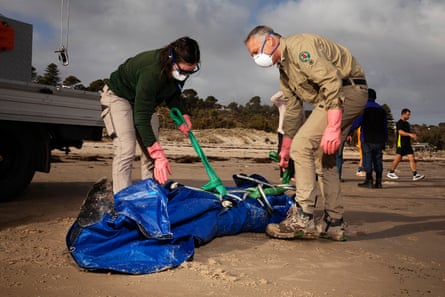
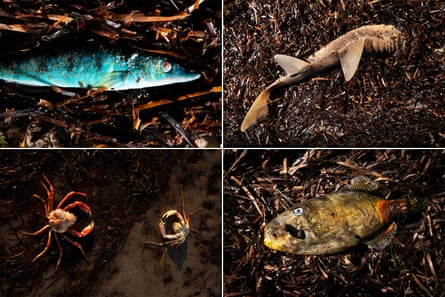
Since March last year, it has impacted 20,000 square kilometers of coastline—an area twice the size of greater Sydney—and ranks among the worst marine mass mortality events globally, killing millions of sea creatures ranging from tiny shellfish to apex predators like white sharks.
This is Australia's first bloom of Karenia cristata, a rare and toxic algae species deadly to marine life and harmful to human health, according to Professor Shauna Murray from the University of Technology Sydney.
Murray, who first identified the species in water samples from South Australia, notes that Karenia cristata has only been recorded in two other locations worldwide—South Africa and an island off Newfoundland, Canada.
Professor David Booth, a marine ecologist specializing in sea dragons at the University of Technology Sydney, describes the impact on marine life as "the most awful, tragic thing I've personally seen in the ocean in my 40-year career."
More than 780 species have been affected, including "devastating losses" of South Australia's marine emblem, the leafy sea dragon, as reported by divers and citizen scientists.
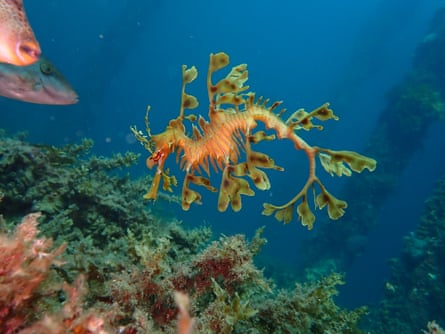
Known as "leafies," these creatures resemble floating seaweed and have a long snout used to slurp tiny mysid shrimp—"the caviar of sea dragons," according to Booth. The species is unique to southern Australia and is particularly concentrated in some of the worst-affected areas around Adelaide and the gulfs on either side.
"People come from all around the world to see these, and they've been absolutely hammered by the bloom; their habitats in many cases are just gone," Booth says.
Dozens of leafy sea dragons have washed ashore dead, with deaths continuing—eight more were found at Kangaroo Island in recent weeks. Their extinction risk is now being reassessed by the International Union for the Conservation of Nature.
Marlene, a diver who has regularly explored Rapid Bay on the Fleurieu Peninsula since 2022, reports that the local population of 45 leafy sea dragons collapsed to just one or two after the bloom passed through.
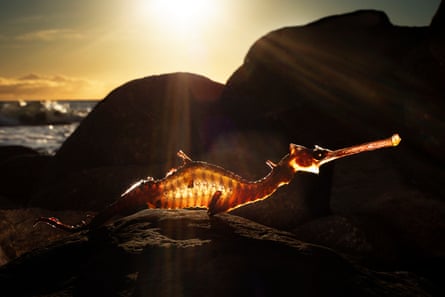
Many of South Australia's aging jetties, including the one at Rapid Bay, have formed artificial reefs supporting sponges and sea squirts, creating habitats for sea dragons, striped pyjama squid, and other unique species.
Stefan Andrews, a marine biologist, avid diver, and co-founder of the Great Southern Reef Foundation, says these fragile environments have been "smashed."
Andrews, who lives in Ardrossan on the Yorke Peninsula, documented the bloom's before-and-after effects at Edithburgh jetty in May and witnessed the bloom reach his favorite dive site at Port Victoria in February.
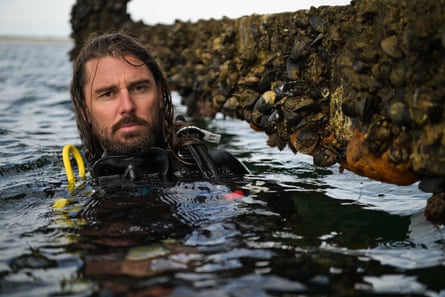
Once-thriving seagrass meadows are now under severe stress, Andrews says. "Razorfish, another habitat-forming species, have almost been completely wiped out wherever the bloom has passed through."
Port Jackson sharks, once common along Adelaide’s coastline, have mostly disappeared, according to Professor Charlie Huveneers, who leads the southern shark ecology group at Flinders University. "Whether these sharks have died or moved away temporarily is unknown," he says.
South Australia's environment department is conducting surveys on the bloom's impact on marine biodiversity at over 200 sites across metropolitan Adelaide, Fleurieu and Yorke peninsulas, Kangaroo Island, Spencer Gulf, and Gulf St Vincent. The survey, timed to match previous assessments, will conclude in June—after the state election on 21 March.
‘Morning Death Walk’
The prolonged crisis has deeply affected the mental health of South Australians, a recent study shows.
Two-thirds of respondents reported they could not stop thinking about the bloom, and about one-third of those directly affected linked their distress to witnessing dead marine life on beaches.
"My morning beach walk has turned from a connect-with-nature walk to the morning death walk," one participant said.
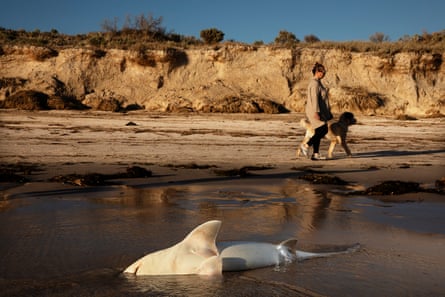
About 47% of respondents said they stopped participating in recreational activities such as surfing, swimming, diving, or beach walking. Approximately a quarter reported physical health issues, including coughing and respiratory irritation after visiting affected beaches.
"When the ocean suffers, communities suffer too," says Dr. Brianna Le Busque, lead author of the study, a conservation psychologist and environmental science program director at Adelaide University.
Separately, data submitted to the Bloomin’ Algae research project—a collaboration between citizen and professional scientists—found that scratchy coughs, sore throats, headaches, and breathing difficulties were commonly reported symptoms from bloom exposure.
South Australia's fisheries and seafood industries have been pushed to the brink of disaster.
All commercial fishing in Gulf St Vincent and Kangaroo Island has been halted until 30 June 2026 due to sharp declines in species such as calamari, garfish, King George whiting, western king prawn, and blue swimmer crab. Recreational catch limits have been halved in these zones, with new limits introduced for several species in Spencer Gulf.
"The journey ahead is long, painful and turbulent," says Kyri Toumazos, executive of the SA Northern Zone Rock Lobster Fishermen’s Association and director of Seafood Industry Australia.
DNA analysis of archived seawater samples collected near Kangaroo Island since 2016 revealed the species was present for nearly a decade before the bloom began.
"However, in 2025 something changed in the environment that caused a dramatic increase in its abundance," says Professor Justin Seymour at the University of Technology Sydney. Further research is needed to determine the cause of this surge and whether the species exists in other Australian states.
Experts like Murray are concerned the bloom still lingers, 12 months on.
"It has somehow managed to persist through a wide range of conditions over the past year," she says. "I’m worried that if conditions similar to last year’s return, we might see a repeat of the bloom."
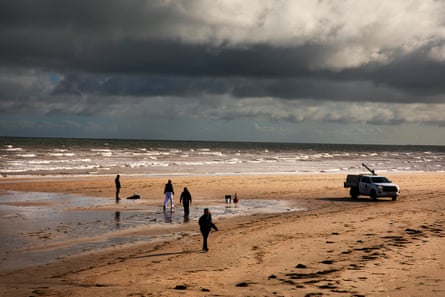
Walking along metropolitan beaches today, it is easy to forget the worst effects that lasted from July to September last year. In the past 10 weeks, testing has shown low or no levels of Karenia at urban sites.
"The water can be super clear," Andrews says, but "it has been stripped of life."
Spencer Gulf was initially spared the worst impacts, but the bloom is now active along the south-west coast of the Yorke Peninsula, raising renewed concerns for the globally unique population of giant cuttlefish that gather in the gulf each May.
Cephalopods are often among the first species to perish when the bloom strikes, Andrews explains. A "bubble curtain" was installed to protect cuttlefish eggs and hatchlings, but it offers little defense for the returning adults.
"They rely heavily on the reproductive success of the previous year," he says. "If they don’t have a successful season, we could lose that sub-population entirely.
"There’s still a lot to lose."